

I read release notes for a living. Not because they’re fun. It’s because if you run any AI in your business, the ground under you moves every couple of weeks, and the operators who stay a step ahead are the ones who noticed the ground move.
Three shifts landed in the last two weeks. None of them got a keynote. All three change what an operator like you is paying for, wiring together, or trusting to run. Two of them are quiet wins. The third can quietly burn you.
I’ve started calling the third one Engine Drift: the model under a tool you already use gets swapped, upgraded, or retired by the provider, and your saved setup keeps running on top of the new thing whether you notice or not. The output can shift meaningfully even though you never touched a single instruction. The only real hedge is to re-test your builds on a schedule. More on that in a minute.
Here’s the short version before I dig in:
- GHL turned on their entire AI stack for free through the summer, so if you’re running on GHL, some of the standalone AI subs bolted on top just got redundant.
- Anthropic dropped multi-agent orchestration inside Claude, which means one job can run a team of agents (researcher, writer, QA) in a single call instead of a Zapier chain, and that’s a real crack in the middleware layer.
- OpenAI retired two models in June, GPT-5.2 on the 12th and GPT-4.5 on the 26th, so anything you built against those is now running on GPT-5.5 whether you told it to or not. That’s Engine Drift.
GoHighLevel turned on its AI stack for free
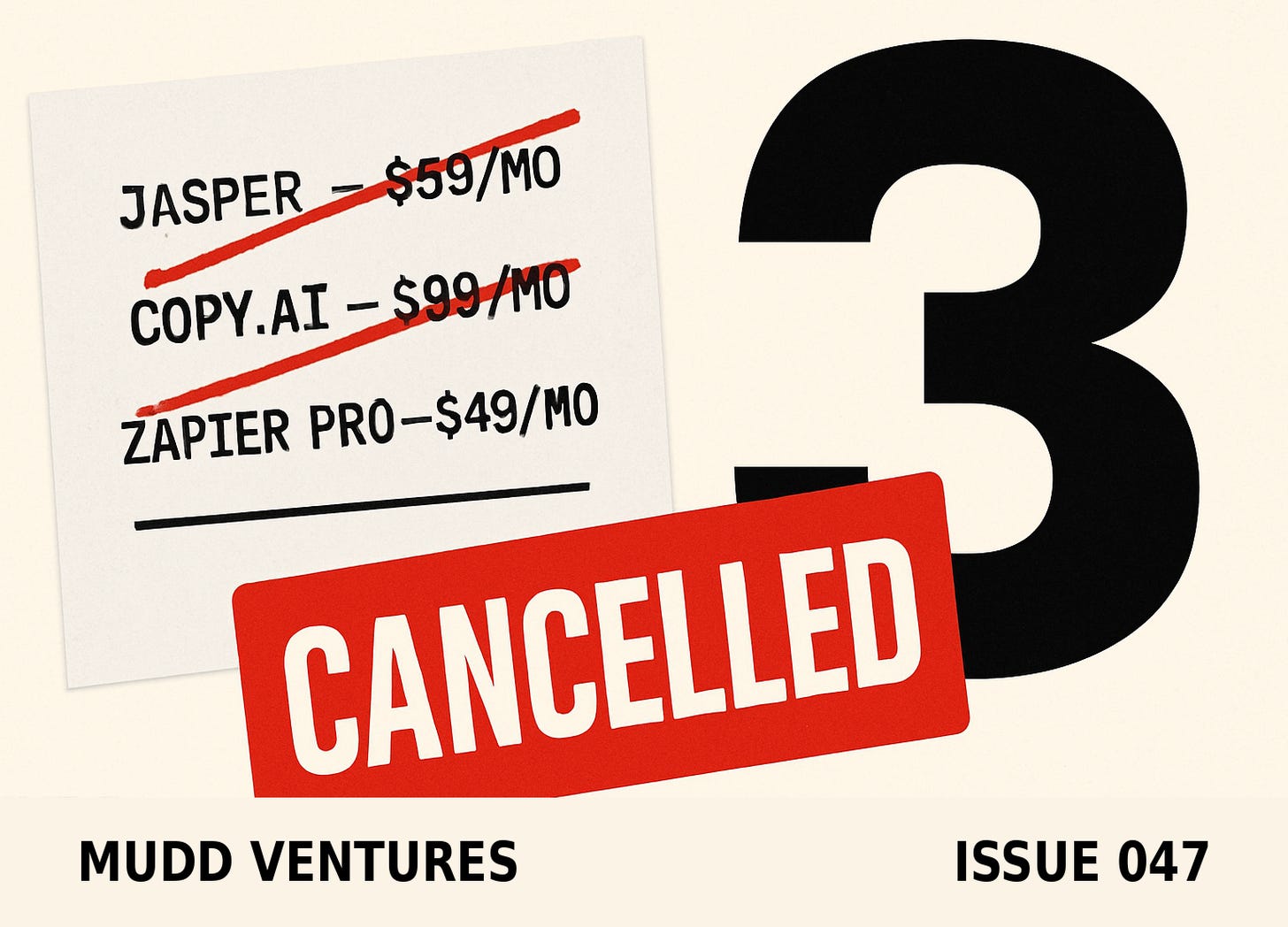
I’ve had probably fifteen conversations with GHL operators this year about their AI stack, and the pattern’s always the same. They’re running GHL for CRM, funnels, workflows, all of it, and then they’ve bolted a $59/mo Jasper seat on top for copy, a $99/mo Copy.ai for ads, sometimes a ChatGPT Team seat too, plus whatever writer they’re using for emails. Two hundred dollars a month easily, on top of GHL, for what usually adds up to “an AI that helps me write things.”
Last week they turned on Ask AI, AI Studio, Workflow AI, Funnel AI, and Email AI for every paid sub-account. Free. Through August. That’s five separate tools, native inside GHL, that overlap directly with what most operators were paying for on top.
The workflow one is the interesting one. You can drop an AI action inside a workflow now the same way you’d drop a webhook, which means your booking flow can enrich, draft, and send without you wiring three tools together. Small thing on paper, real cost reduction if you’re the operator who was paying for the enrichment tool plus the writer plus the tool that sends.
So here’s what I’d do this week if I were running on GHL. Pull up your subscriptions, and any AI writing tool that’s doing what one of those five now covers, cancel it. Then rebuild one workflow, probably the one that touches new leads, using the Workflow AI action instead of the Zapier or Make chain you had before.
The thing that gets me about this isn’t the money. It’s the pattern. The tool you already pay for keeps absorbing what you were buying separately, and I wrote about this in May when Anthropic embedded 15 workflows into apps you already own. GHL just did the same move for the CRM crowd. The line item disappears whether you cancel it or not, so cancel it.
Anthropic put a real crack in the Zapier bill
Anthropic ran Code with Claude a couple weeks back, and the piece that mattered wasn’t the marketing. It was multi-agent orchestration. You can build a job now that runs a small team of Claude agents in sequence, one researches, one writes, one checks, as a single call. Not a chain of Zapier steps calling three separate models. One job.
I’ve been trying to migrate a client’s lead-enrichment flow off Zapier for about six months. Standard mess: Zapier hits Apollo, then Clay, then a GPT step to write the intro line, then HubSpot. Twelve steps. About $180 a month in tool costs across everything, mostly because Zapier and Clay both bill on operations. The migration always died because rebuilding it in Claude Code meant writing custom orchestration for the agent handoffs, and that was more work than it was worth.
That’s the thing that just changed. The orchestration lives inside the model now, so I don’t have to write it. I write instructions for each agent (the researcher gets one, the writer gets one, the QA gets one), and Claude runs the team as one job. My best guess after playing with it for a few hours is that I can pull that whole enrichment flow into a single seat at maybe $200/mo total, which replaces about $180 of tool spend plus some of what I was paying the VA to babysit the workflow.
If you’ve got a workflow you built on Zapier or Make that stitches together three or four tools plus an AI step, this is the week to look at it fresh. Don’t rebuild everything. Pick the one workflow you touch most and see if a multi-agent Claude job can absorb it. My rule so far: if the workflow is more than half AI thinking and less than half moving structured data between tables, it probably belongs in Claude now. If it’s mostly moving data, keep it in Zapier.
The bigger point, and this is the one I keep coming back to when I talk to operators about their stack, is that middleware is thinning. Zapier isn’t dead, but the reason to pay for it just narrowed.
The models under your custom GPTs already changed
Now the one that can burn you.
OpenAI retired GPT-5.2 from ChatGPT on June 12, and GPT-4.5 on June 26, custom GPTs included. Anything that was running on either of those now runs on GPT-5.5. The instructions still live, and the engine underneath swapped.
That’s the trap. If you built a custom GPT in the last year and tuned it against a specific model’s behavior (the way it hedges, the way it formats, the length it defaults to), it’s running on a different engine now, and the same prompt can come back meaningfully different. Nobody sent you an email about it. The system just kept running.
I saw this happen with a client of mine last week. He runs a small services shop and has a custom GPT his team uses to draft quotes. He mentioned it was “off” lately, nobody had touched the instructions, and it turned out he’d tuned it back in the winter against a specific model that was gone. The outputs had drifted enough that his team was rewriting more than they used to, so he’d been silently paying that tax for weeks.
If you built anything against a specific model in the last twelve months (a custom GPT, an API call in a Zap, a pinned model string in a Make step), this is the week to walk through them and re-test each one against a known-good input. Not a new input where you can talk yourself into liking the output. A specific input where you already know what the good answer looks like. If the tone, format, or accuracy shifted, either update the instructions or pin a specific model that’s still available.
This is going to keep happening. Providers retire models on their own schedule, and your setup lives on top of theirs. The only durable move is to build a re-test into your calendar every couple months, or every time you notice output feels different, so Engine Drift can’t quietly compound.
The pattern underneath all three
Three announcements, three angles on the same shift.
The tool you already own is absorbing what you were paying for separately (GHL). Middleware is thinning (Anthropic). The engine under your saved setup can change without asking you (OpenAI).
What all three have in common, and this is the thing worth taking, is that your AI stack isn’t a set of tools you decided on. It’s a set of dependencies you’re renting. The provider can rearrange what’s inside them, absorb the layer above them, or retire the model under them. The job isn’t to pick tools once and forget them. The job is to re-audit them on a schedule so you’re not paying for something you don’t need, wiring together something that now runs in one place, or trusting an engine that got swapped.
I have this on my calendar every four weeks. Twenty minutes. I look at every AI line item, every workflow that stitches together more than three tools, and every custom GPT or pinned model string. Half the time I find nothing, and every once in a while I find a subscription I can cancel, a workflow that just got easier to build, or an engine that drifted underneath a build I’d forgotten about.
Three shifts, one habit. If you don’t already have “audit the AI stack” on a monthly calendar, put it there this week. It’ll pay for itself the first time you find one thing.
Andrew
P.S. Two threads from the archive if you want more on any of this:
The tools you already pay for keep absorbing features (the embedded workflow layer)
Notion just made Zapier optional (the middleware thinning trend, before this week’s evidence)
If you’d rather do this audit alongside other operators reading the same release notes, that’s the exact conversation we’re having in the Operator Council.
Reply and tell me what you found. I read every one.